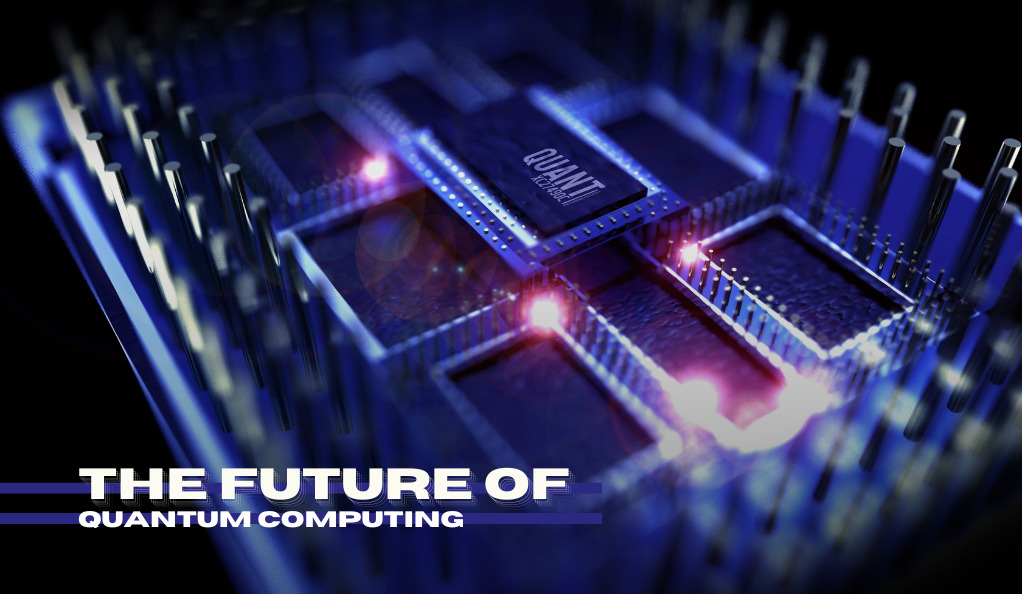
Imagine a computer that can solve problems much faster than today’s computers, opening doors to discoveries in medicine, physics, and artificial intelligence. This is what Quantum Computing promises.
Quantum computing is a new type of computing based on the strange but powerful laws of quantum physics. While traditional computers use bits (0s and 1s), quantum computers use quantum bits or qubits, which can represent 0, 1, or both at the same time. This unique property could allow quantum computers to perform certain calculations exponentially faster.
In this article, we will explain quantum computing in simple words, how it works, its potential applications, challenges, and future prospects.
What Is Quantum Computing?
Quantum Computing is a branch of computing that uses the principles of quantum mechanics to process information.
Unlike classical computers, which use bits as the smallest unit of data, quantum computers use qubits. Qubits take advantage of two key quantum phenomena:
- Superposition: A qubit can be in multiple states (0 and 1) simultaneously.
- Entanglement: Qubits can be connected so that the state of one instantly affects the state of another, even over large distances.
These properties allow quantum computers to explore many possible solutions at once, making them powerful for certain tasks.
How Does Quantum Computing Work?
Classical Bits vs Quantum Qubits
- A classical bit is either 0 or 1.
- A qubit can be 0, 1, or both at the same time (superposition).
Quantum Gates
Quantum computers manipulate qubits using quantum gates, which change the state of qubits in specific ways, similar to logic gates in classical computers.
Quantum Circuits
Quantum gates are combined into circuits to perform computations. Due to superposition and entanglement, quantum circuits can process many possibilities simultaneously.
Potential Applications of Quantum Computing
Though still in early stages, quantum computing promises to revolutionize many fields:
1. Cryptography
- Quantum computers could break many current encryption methods by solving complex math problems quickly.
- They also enable quantum cryptography, which promises unbreakable communication security.
2. Drug Discovery and Chemistry
- Quantum computers can simulate molecules at the quantum level, helping discover new medicines and materials faster.
- This is very hard for classical computers due to complexity.
3. Optimization Problems
- Many industries face complex optimization problems (e.g., route planning, supply chain management) that quantum computers can solve more efficiently.
4. Artificial Intelligence and Machine Learning
- Quantum algorithms may speed up machine learning tasks, improving AI capabilities.
5. Financial Modeling
- Quantum computing can help analyze risk, detect fraud, and optimize portfolios with better speed and accuracy.
Challenges of Quantum Computing
Despite its promise, quantum computing faces many hurdles:
- Qubit Stability: Qubits are very fragile and can lose their state easily (called decoherence).
- Error Correction: Quantum errors are common, and fixing them is difficult.
- Hardware: Building quantum computers requires advanced technology and extreme conditions (very low temperatures).
- Programming: Quantum algorithms are complex and require new ways of thinking.
Quantum Computing vs Classical Computing
| Aspect | Classical Computing | Quantum Computing |
|---|---|---|
| Basic Unit | Bit (0 or 1) | Qubit (0, 1, or both simultaneously) |
| Processing | Sequential or parallel operations | Explores many states simultaneously |
| Speed for Specific Tasks | Efficient for many general tasks | Much faster for certain complex tasks |
| Stability | Very stable | Fragile and sensitive |
| Current Use | Everyday computers, smartphones, servers | Experimental, research stage |
How Can You Learn Quantum Computing?
- Understand Basic Physics and Math: Learn quantum mechanics basics, linear algebra, and probability.
- Learn Quantum Programming Languages: Tools like Qiskit (by IBM), Cirq (by Google), and others.
- Experiment on Quantum Simulators: Use online simulators to practice quantum algorithms.
- Take Online Courses: Many universities and platforms offer beginner-friendly courses.
- Join Communities: Engage with other learners and experts on forums and groups.
The Future of Quantum Computing
Quantum computing is still young but progressing rapidly. Many companies like IBM, Google, and Microsoft are investing heavily in this technology. In the coming years, we expect:
- Better qubit technology and error correction.
- Practical quantum computers solving real-world problems.
- Integration with classical computers for hybrid solutions.
- New industries and applications emerging from quantum advances.
Conclusion
Quantum computing could change the way we solve problems, from medicine to security to AI. Though the technology is complex and faces many challenges, it holds enormous potential for the future.
Understanding quantum computing today prepares you for the exciting tech of tomorrow.
Are you ready to dive into the quantum world?